
Canterbury
Canterbury Motorsport Fabrication: Cages, Chassis and Competition Brackets
Same day callback across Kent
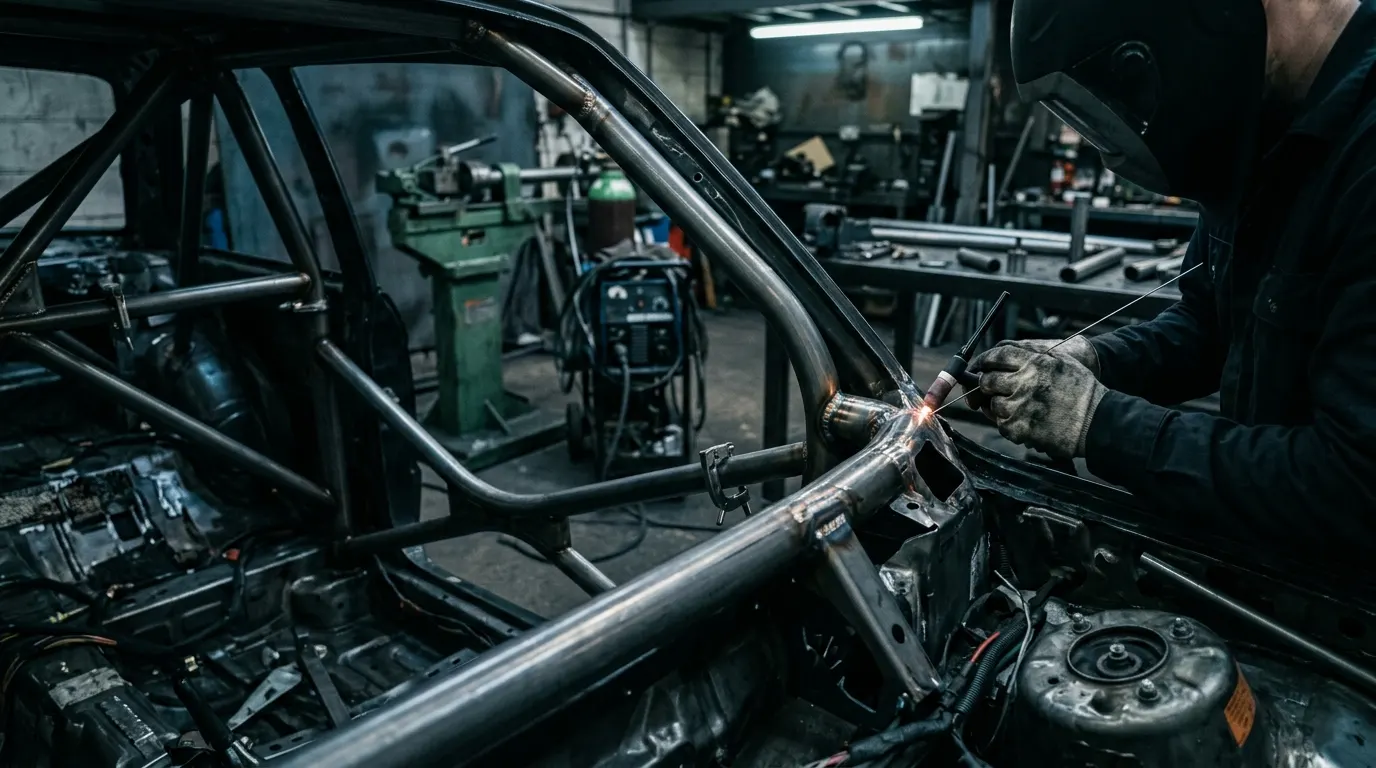
Canterbury has the shortest commute to competition of anywhere in east Kent. Lydden Hill sits a short run down the A2 towards Wootton, which means the city has a steady population of rallycross entrants, circuit racers and testing regulars who can be at a venue before most people have finished loading. Motorsport fabrication in Canterbury is shaped by that proximity, because a car that can be tested cheaply gets developed constantly, and constant development means constant fabrication. Brackets get moved, mounting points get revised, and something always needs modifying before the next test day. The city's other characteristic is a broad spread of budgets. Canterbury has a large student and graduate population running cheap, heavily modified cars on a shoestring alongside genuinely serious club entrants with properly funded programmes. Paul is happy at both ends. On a budget build the honest advice is often to spend the money on the cage and the mounting points and leave the cosmetics until later, because those are the parts nobody sensibly retrofits after an accident. On a funded car the conversation is about detail: tube routing that clears a data logger, a bulkhead that seals properly, a mount that can be swapped in the paddock. Rallycross prep is a distinct discipline and Canterbury sees a good deal of it. Gravel and mud find every unsealed seam. Underbody protection needs to hinge or unbolt for cleaning. Suspension pickups take loads that road cars never see. Parkview Fabrications strengthens turret tops, fabricates skid plates, reinforces rear beam mounts and builds bash bars that fold predictably rather than transmitting an impact into the bulkhead. Canterbury motorsport fabrication of this kind is not about making everything as strong as possible, it is about making the right things strong and letting the rest sacrifice itself. Access around the city is worth mentioning. The ring road and the Wincheap side are straightforward for a trailer, but a lot of Canterbury housing is either in terraces or in villages up narrow lanes, so cars are usually collected from a unit or a friend's yard rather than a driveway. Parkview Fabrications will discuss the logistics when the job is quoted rather than leaving you to work it out. What Paul brings to a Canterbury build is 35 plus years across light and heavy engineering, working alone so the person who takes your call is the person who welds the car. Bring the regulations you are running to, because confirming your series requirements is your responsibility, and Paul will build precisely to that specification. Call 07873 263431 or send photographs and dimensions to parkviewfabs@gmail.com to open the conversation.
Motorsport Fabrication in Canterbury: FAQs
Common questions about motorsport fabrication from Parkview Fabrications in Canterbury.
Yes. Skid plates, hinged underbody protection, reinforced suspension pickups and bash bars are all part of the work. Canterbury sits close to circuit and rallycross testing on the A2 corridor, so Parkview Fabrications sees plenty of these builds and Paul designs the protection to sacrifice predictably rather than driving an impact into the bulkhead.
The cage and the mounting points. Parkview Fabrications will tell a Canterbury owner honestly that structure and safety fabrication are the parts nobody retrofits sensibly after an accident, while cosmetic and aero work can wait a season. Paul is happy to phase a build across two winters if that is what the budget realistically allows.
Yes. Tube routing on a Canterbury build is planned around the equipment you actually run, including loggers, extinguisher plumbing, wiring looms and cut-off switches. Parkview Fabrications sets these positions out before bending, because moving a welded-in bar afterwards means cutting and rebuilding rather than a simple adjustment.
Yes. Fabricated bulkheads, firewall panels and sealing plates for cable and pipe pass-throughs are regular work. Parkview Fabrications makes these to fit the Canterbury car in front of Paul rather than to a template, and he will discuss which material and thickness suits the requirement you are working to.
Logistics are discussed when the job is quoted. Many Canterbury owners keep competition cars in a unit or a yard rather than a driveway, and Parkview Fabrications will agree collection or delivery arrangements up front rather than leaving you to sort it out. Phone 07873 263431 to talk through where the car currently sits.
Yes. Parkview Fabrications builds panels, guards and covers with captive fasteners or quick-release fixings so they come off in the paddock rather than needing a ramp. On Canterbury cars that test frequently Paul finds this saves more time over a season than most performance modifications, and it costs very little at the fabrication stage.
Yes. Parkview Fabrications will discuss material and section options with you and explain what each does to weight, stiffness and reparability. The final specification for a Canterbury build must come from your own series regulations, which you should confirm, and Paul will then build precisely to those figures.
Usually yes. Parkview Fabrications straightens, cuts back and rebuilds damaged bash bars and bumper supports for Canterbury competitors. Paul checks the mounting points behind the damage as well, because contact hard enough to fold a bar has often distorted the structure it was bolted to and that is the part that matters.
As much as possible, though small jobs can sometimes be squeezed in. Parkview Fabrications is one operator, so a Canterbury car needing work before a Lydden test is best booked well ahead. Call 07873 263431 with the job described and Paul will say honestly whether it fits the schedule.
Yes, both. Parkview Fabrications builds for Canterbury club competitors running full championship programmes and for owners with a road-legal car used on track days. Paul asks what the car is actually used for at the start, because the right fabrication answer for a stripped race car is often the wrong one for a car still driven home.